Sunday, September 25, 2011

Race and ethnicity

An international exhibition

The Great Exhibition was, from the start, intended as an international exhibition, bringing all nations together in common industry.  Prince Albert, for example, at a Mansion House meeting in 1850, spoke of "peace, love and ready assistance, not only between individuals, but between the nations of the earth". [1] [Times 22 March 1850].   Many foreigners did indeed come to the Great Exhibition.  In a contemporary account of the Great Exhibition, Henry Birch expressed amazement at the multi-cultural, ethnically diverse crowd he claimed to see at the palace:

"From whence have all these people been gathered?...They include men of every clime and color: - the European, the American, the Indian, the Chinese, the African, the Greenlander, the white, the black, the brown, the red; all the forms and figures, shades and colors of the human family". [2]


Season ticket for the Great Exhibition. Source: the Institution of Engineering and Technology website

Even if somewhat exaggerated in style, the description above illustrates that there was no overt segregation and little or no race based discrimination at the Great Exhibition. There was, however, a marked divide between the Great Exhibition's stated aim of bringing all nations together and Victorian perceptions of the world order.

Victorian perceptions of world order

From around the 1840's, the idea of race as a scientifically based explanation of cultural and/or biological difference was increasingly prominent in Britain, used in a variety of arenas to explain why some civilizations were superior to others and why they were likely to remain so.  Whilst Darwin's Origin of the Species was not published until 1859, the ideas contained within it, as well as nascent ideas of social darwinism, were beginning to be discussed within Victorian elite.  Put simply, theories of social darwinism could justify (and were increasingly used to justify) Britain's rule over inherently "inferior" peoples of her colonies.  These native peoples were variously assumed to be "fixed" in a perpetual childhood or alternatively able to achieve civilized status but only through graduation education and acculturalisation over a long period of time.

Such ideas of the inherent differences between white Europeans and other civilizations were apparent at the Great Exhibition.  Thomas Onwhyn's pamphlet Mr and Mrs Brown's Visit to London to the see the Great Exhibition of All Nations.  How they were astonished at its wonders, inconvenienced by the crowds, and frightened out of their wits, by the Foreigners, provides an illuminating example [3].


Cannibal Islanders: an illustration from Thomas Onwhyn's Mr and Mrs Brown's Visit to London to see the Great Exhibition of all Nations.  Source: http://russianlancashire.wordpress.com/category/anglo-russian-relations/russophobia/

The group of "Cannibal Islanders' are depicted as animal like savages, sitting at an outdoor restaurant, beneath a sign that reads "Soup a la Hottentot".  They have dark skin, bare feet and monkey-like faces and one holds a knife, threatening to eat the Browns' child.

The satirical report Authentic Account of the Chinese Commission, which was sent to report on the Great Exhibition; wherein the opinion of China is shown as not corresponding at all with our own by Henry Sutherland Edwards provides another glimpse of Victorian attitudes [4].  


Frontispiece to Henry Sullivan Edward's An Authentic Account of the Chinese Commission, which was sent to report on the Great Exhibition.  Source: Stanford University - http://www.stanford.edu/group/ww1/spring2000/exhibition/chinese.html

The Chinese emperor has sent Congou, who has killed his grandmother, mother, wife and daughter, to provide an account of the exhibition.  One stanza of the long, rhyming poem reads:

The opening in short was as dull as could be;
There was no execution whatever to see;
There was no one impaled and the use of the saw 
Is not even mentioned in English law.

Whilst overt racial discrimination was not a feature of the Great Exhibition, racism in the sense of a belief of inherent differences in people's traits and capacities as a result of race certainly was.

___________________
Notes


[1] The Times 22 March 1850
[2] Young, Paul. Globalisation and the Great Exhibition. Palgrave macmillan, 2009.  Pg 53
[3] Auerbach, Jeffrey A. The Great Exhibition of 1851: a nation on display. Yale University Press, 1999.  Pg 174
[4] Ibid.  Pg 175


Sunday, September 18, 2011

Financing the Great Exhibition

Britain in the 1840s

Major changes in agriculture, manufacturing, mining, transportation and technology in the late eighteenth and early nineteenth centuries had had a profound effect on the socioeconomic and cultural makeup of Britain.  At the beginning of the nineteenth century, a majority of the population lived in the countryside and London had 1 million inhabitants.  By 1850, half of the population of Britain lived in towns and the population of London had doubled.   At the start of the 1840's, railway lines in Britain were few and scattered, but by the end of the decade, a virtually complete network had been laid down and the majority of towns and villages in Britain were connected.  By the mid nineteenth century, Britain had become the world's leading industrialized power.


The factory, one of the mainstays of the Industrial Revolution in Britain

Against this background of rapidly increasing wealth and empire, the 1840's were difficult years economically.  Britain experienced two "bubbles" and a financial crisis; railway shares underwent a substantial reversal during the railway mania and the price of corn rose and fell dramatically soon afterwards, partly as a result of the repeal of the Corn Laws in 1846.  It was in this uncertain economic climate that advocates of a national exhibition faced the challenge of drumming up support and finances.

Financing the Great Exhibition

One of the liveliest contemporary debates surrounding the organization of the Great Exhibition was how such a huge undertaking was to be financed.  Was the Exhibition to be funded largely by private individuals who faced the prospect of losses if the Exhibition was a failure, but potentially large gains if it was a success, or was it instead to be financed through public funds and voluntary contributions?

The first advocates of the Great Exhibition, members of the Society for the Encouragement of Arts, Manufactures and Commerce (later the Society of Arts) initially faced little choice in the matter.  It was clear that the support of Prince Albert, royal consort and president of the Society, would be necessary to raise the necessary funds.  Though expressing interest in the idea of a national exhibition from an early stage, Prince Albert showed caution in publicly backing the concept until sufficient public support had been proven.  Only after such support had been demonstrated would he advocate the establishment of a royal commission to oversee the organization of the exhibition.


Prince Albert, taken by John Jabez Edwin Mayall, 1853

Without a royal commission, the Society faced great difficulty in securing the financial backing necessary to drum up the required public support for the project.  After much fruitless negotiation with several builders and contractors, the Society turned to a public works contracting firm, Messrs James and George Munday, who agreed, on certain conditions, to advance £20,000 as a prize fund, erect a suitable building, find offices, advance any funds necessary for preliminary requisites and to take on the whole risk of loss.

Once the royal commission had been officially established in January 1850, however, and with important sections of the press vehemently against the private financing of a national and public exhibition, the Royal Commission moved to terminate the contract.


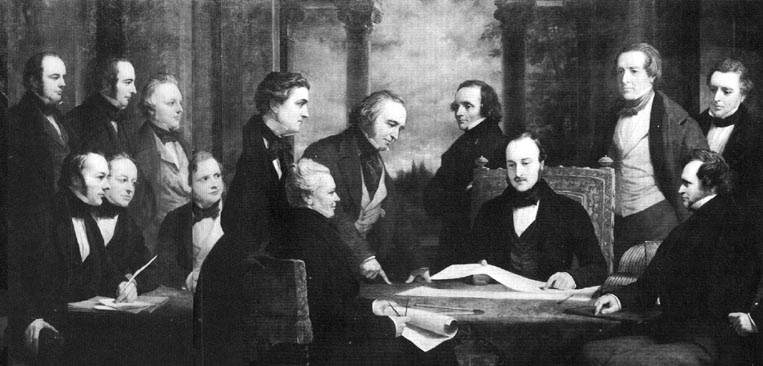
Henry Windham Phillips, The Royal Commissioners for the great Exhibition of 1851, Victoria and Albert Museum, London


At a meeting of the "merchants, bankers and traders of the City of London" (so wrote the Times on 26 January 1850), a resolution was proposed and seconded,

"That this meeting entirely concurs in the reasons which have induced the Royal Commission to terminate the contract with the Messrs. Munday, and to rest the success of the proposed exhibition entirely upon public liberality."

In seconding the motion, a Mr T E Baring spoke for the mood of those present, according to the Times, stating:

"That contract might have been necessary at the time when first entered into, in order to give to the world some evidence that the plan would in some shape be brought into execution; but it did not meet with general concurrence, from the notion that every individual should, as far as possible, give his consent to the project; and when the matter was confined to a contract, that seemed rather to exclude an appeal to public contributions. That contract was now terminated, and it was the people of England that the Royal Commissioners appealed. (Hear, hear.) As citizens of London they were proud that the first appeal was made to them, and he trusted no gentleman present could doubt that the appeal would be successful. (Hear, hear.)".

The outcry over the prospect of a national event being funded by private capitalists who might potentially benefit from public funds forced the organizers and the commissioners to make the event a truly public and national undertaking.  The Great Exhibition was to be funded not by the government or the wealthy few, but by people of all classes by means of voluntary contributions.

The Royal Commission oversaw the establishment of over 300 local committees throughout the United Kingdom which were responsible, among other things, for gathering subscriptions from within their boundaries.  The success of these committees, whilst mixed, is evidenced by the fact that over half the funds for the Exhibition came from outside London.  Whilst the City of London contributed £26,632, Bradford contributed £1,605, Glasgow £2,666 and Rochester £13.

Contemporary reaction to the Great Exhibition

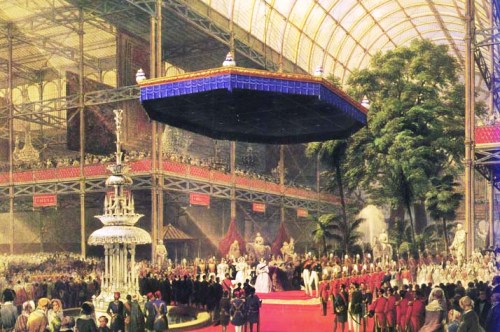
Contemporary reaction to the Great Exhibition was almost universally favorable from the day it opened on 1 May 1851.

A review in the Times of London on 2 April 1851, the day after the Exhibition was opened by Queen Victoria, describes public reaction to the Exhibition:

"Certain it is that people who had never before seen the sun rise, except through a ballroom window, were in full activity soon after dawn, impelled by the impulse that seem to lend life and energy to the whole substance of the great and somewhat lethargic metropolis...the arteries of the great city surged with life, beat full and strong under the pressure of a hitherto unknown excitement.  Never before had so vast a multitude collected together within the memory of man".


"Written words are powerless and weak in the presence of that great muster of worldly magnificence - that stupendous act of homage to industry and the peaceful arts".

The Times recorded attendance figures, takings and occurrences at the Exhibition on a daily basis throughout the summer of 1851, commenting on 12 May 1851, for example:

"This is the tenth day of the Great Exhibition and it is literal truth to say that every one of the myriads who have visited it has done so each successive day with increased admiration and delight.  This is proved not only by the enthusiastic expressions one hears from every side, but still more by the pecuniary success.  The sale of season tickets continues as brisk as if the Exhibition were still to open and none of the exclusive attractions...have been exhausted".

Individual reaction was, on the whole, equally as favorable.  Charlotte Bronte, author of novels such as Jane Eyre and Shirley, visited the Great Exhibition and described her visit in a letter:


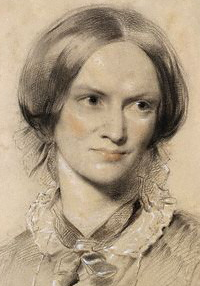
Jane Eyre, depicted in a painting by George Richmond in 1850

"Yesterday I went for the second time to the Crystal Palace. We remained in it about three hours, and I must say I was more struck with it on this occasion than at my first visit. It is a wonderful place – vast, strange, new and impossible to describe. Its grandeur does not consist in one thing, but in the unique assemblage of all things. Whatever human industry has created you find there, from the great compartments filled with railway engines and boilers, with mill machinery in full work, with splendid carriages of all kinds, with harness of every description, to the glass-covered and velvet-spread stands loaded with the most gorgeous work of the goldsmith and silversmith, and the carefully guarded caskets full of real diamonds and pearls worth hundreds of thousands of pounds. It may be called a bazaar or a fair, but it is such a bazaar or fair as Eastern genii might have created. It seems as if only magic could have gathered this mass of wealth from all the ends of the earth – as if none but supernatural hands could have arranged it this, with such a blaze and contrast of colours and marvellous power of effect. The multitude filling the great aisles seems ruled and subdued by some invisible influence. Amongst the thirty thousand souls that peopled it the day I was there not one loud noise was to be heard, not one irregular movement seen; the living tide rolls on quietly, with a deep hum like the sea heard from the distance".

William Makepeace Thackeray, one of the leading novelists of the Victorian era, was moved to write a poem about the opening of the Crystal Palace:

As though 'twere by a wizard's rod                               
As blazing arch of lucid glass
Leaps like a fountain from the grass                        
To meet the sun.
A quiet green, but few days since;
With cattle browsing in the shade,
And lo! long lines of bright arcade
In order raised!
A palace as for a fairy prince,
A rare pavilion, such as man
Saw never since mankind began,
And built and glazed.

A peaceful place it was but now,
And lo! within its shining streets
A multitude of nations meets;
A countless throng
I see beneath the crystal bow,
And Gaul and German, Russ and Turk,
Each with his native handiwork
And busy tongue.

I felt a thrill of love and awe
To mark the different garb of each,
The changing tongue, the various speech
Together blent:
A thrill, methinks, like His who saw
"All people dwelling upon earth
Praising our God with solemn mirth
And one consent."

Extract from 'A May Day Ode' by
William Makepeace Thackeray (1811 - 1863)
Published in The Times, 1 May 1851